
It’s a common question:
Which SIP panel brand has the best energy-efficiency ratings?
The short answer?
Most reputable SIP manufacturers offer comparable energy performance — because energy efficiency in SIP construction is largely driven by panel thickness, core type, and overall building design — not just the R-value of the foam.
Let’s break that down.
Energy Efficiency in SIPs: What Actually Matters
When people compare energy efficiency, they’re usually looking at:
- R-value per inch
- Total wall or roof R-value
- Air tightness
- Thermal bridging
Across the SIP industry, most manufacturers offer panels with similar foam core options and thickness ranges. That means you can build a highly energy-efficient home or commercial structure using SIPs from many different suppliers.
Panel Thickness Drives R-Value
Energy performance increases as panel thickness increases. For example:
Panel Thickness
R-Value at 40F
Performance Value Compared to Fiberglass
4 1/2″ SIP
R-15
R-24
6 1/2″ SIP
R-24
R-36
8 1/4″ SIP
R-31
R-45
10 1/4″ SIP
R-40
R-60
12 1/4″ SIP
R-48
R-70
Most SIP suppliers, including FischerSIPs, offer a range of thickness options so builders can meet climate zone requirements and performance goals.
If you’ve seen our video about gray foam (Neopor), you know that different foam formulations can slightly adjust R-value per inch — but again, these material options are widely available across the industry.
In other words:
All SIPs typically offer the similar R-Values; the difference is how the home is built.
Why Most SIP Brands Can Deliver High Energy Performance
Structural Insulated Panels are inherently energy efficient because they:
- Minimize thermal bridging
- Reduce air leakage compared to stick framing
- Provide continuous insulation
- Deliver consistent performance across the wall or roof assembly
When properly designed and installed, SIP buildings regularly outperform conventional construction in blower door testing and long-term energy use.
The real differentiator isn’t typically the type of foam used — it’s how the system is engineered and assembled.
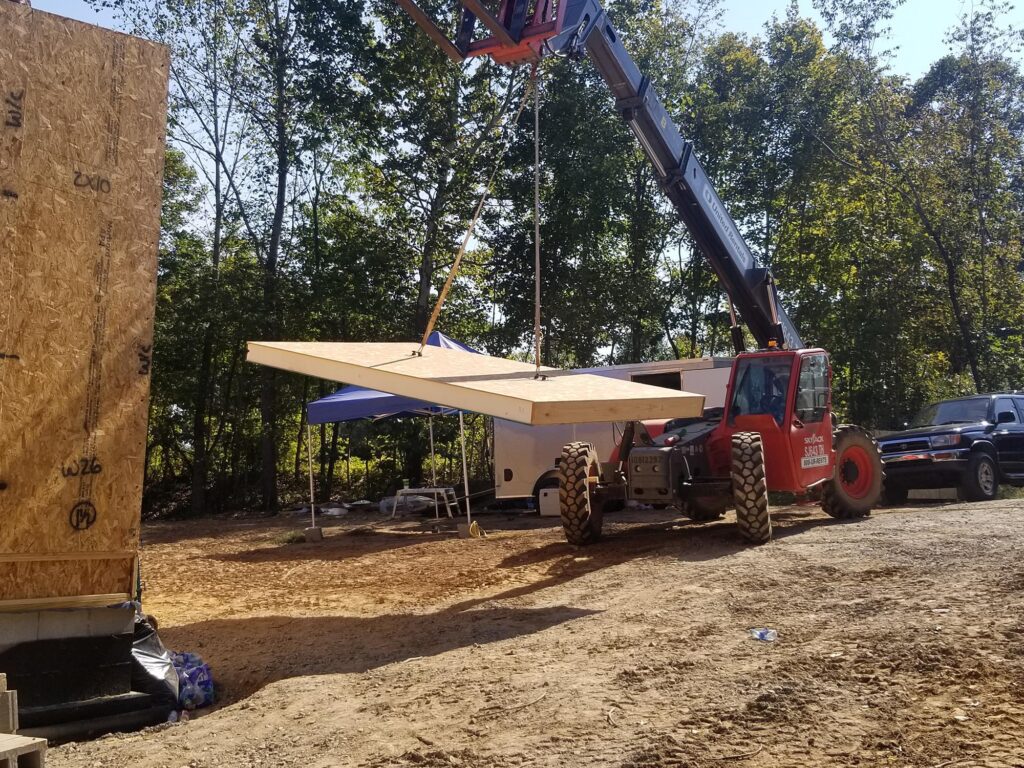
The Bigger Question: What Actually Differentiates SIP Manufacturers?
If most suppliers can deliver strong R-values, what should you compare?
Here are areas where manufacturers vary more significantly:
1. Ready-to-Assemble (RTA) Process
Not all SIP suppliers provide the same level of panel preparation.
Some ship “blank” panels that require more on-site cutting and modification. Others offer more comprehensive Ready-to-Assemble packages that:
- Arrive pre-cut
- Include detailed installation drawings
- Reduce jobsite waste
- Shorten construction timelines
- More lumber installation options for faster installation.
This can impact labor efficiency and overall project cost far more than a small R-value difference.
2. Engineering & Design Support
Energy efficiency isn’t just about panel specs — it’s about whole-building design.
Look at whether a supplier provides:
- Shop drawings
- Engineering review
- Load calculations
- Technical guidance during design
- Installation support
These services help ensure the building performs as intended — which is ultimately what energy efficiency is about.
3. Experience & Project Type
Residential, commercial, agricultural, and specialty projects all have different performance demands.
A supplier experienced in your specific project type may be more valuable than one advertising a slightly higher R-value.
So… Who Offers the “Best” Energy Efficiency Ratings?
If you compare similar panel thicknesses and core materials, most reputable SIP manufacturers will offer comparable energy performance.
The better question to ask is:
- What thickness do I need for my climate zone?
- How will this integrate with my HVAC design?
- What level of panel preparation will make installation easier?
- How does the supplier support the design process?
Energy efficiency is built into the SIP system itself. What matters more is how the panels are designed, detailed, and installed as well as the experience of the manufacturer.
Final Thoughts
SIPs are already a high-performance building system.
When evaluating manufacturers, look beyond just R-values. Consider:
- Level of Ready-to-Assemble services
- Engineering involvement
- Installation guidance
- Project coordination
A well-designed SIP project will deliver long-term energy efficiency.
If you’d like to discuss what panel thickness or RTA level makes sense for your project, we’re happy to walk through it with you.